Not what my parents were expecting, to say the least.
Not because I did not understand the material.
Because I was terrified of public speaking.
Standing in front of people made my chest tighten. I avoided it whenever I could. I froze.
Today, I speak comfortably in front of crowds of 300 plus. You could not shut me up if you tried.
That change did not come from confidence. It came from lived experience.
One of the most under discussed truths about leadership is this:
as your life changes, your worldview changes. And when your worldview changes, the way you lead has to change with it.
Politics. Religion. Education. Finance. Risk.
Every experience quietly reshapes how we see the world and how we show up for others.
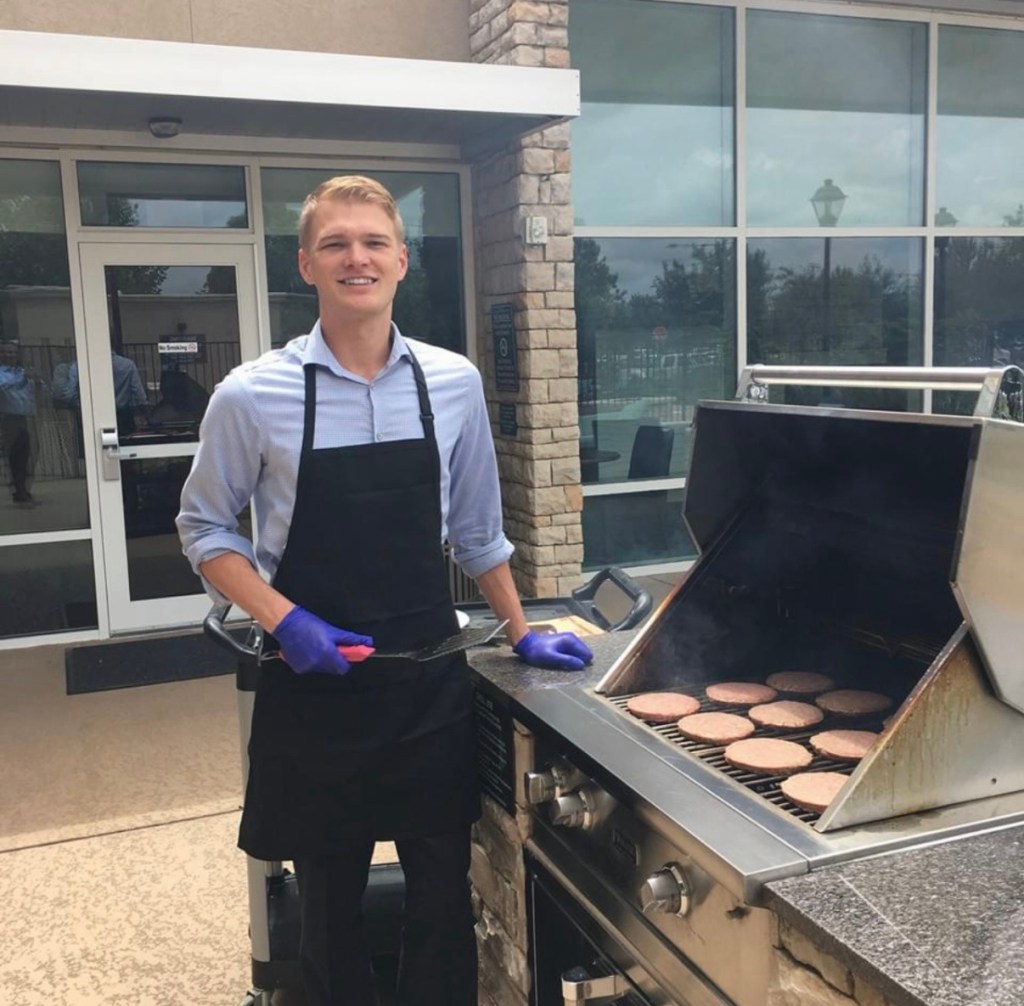
When I started in hospitality, I believed leadership meant teaching by doing. Cleaning rooms alongside housekeepers all day. Working full front desk shifts. Being physically present for everything.
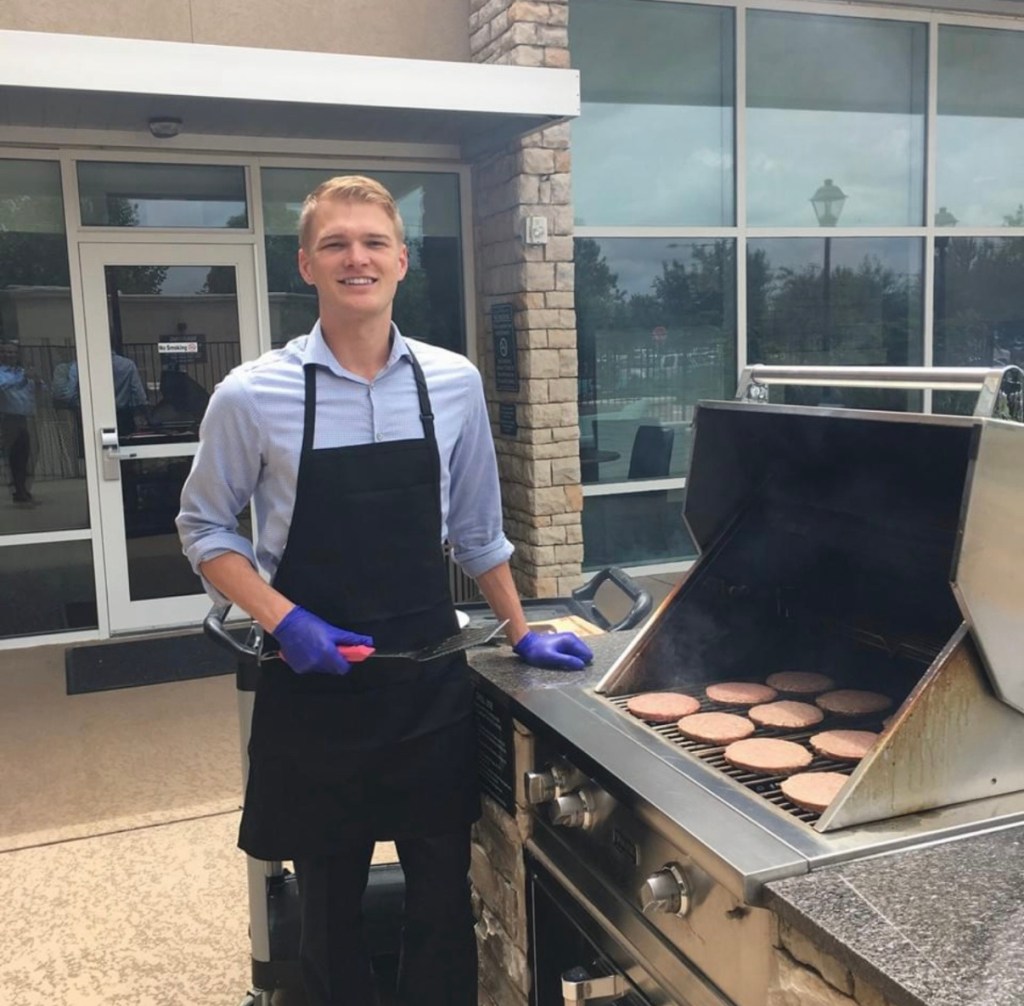
Grilling for my team during my first GM role.
My first hotel had six employees.
That approach worked.
Later, I managed a single property with eighty.
Portfolio wide, I have overseen more than 250.
At scale, leadership cannot look the same. Not because you care less, but because the system is bigger than you.
Add controllers. HR generalists. Valet partners. Security. Brand compliance. Demanding asset managers. Publicly traded entities. The stakes increase. Quickly.
Suddenly you are not just leading people. You are leading risk.
Operational risk. Human risk. Reputational risk. Legal risk. Financial risk.
Learning GAAP and SOX did not feel foreign to me. It felt necessary. Internal audit training became part of the job. Understanding controls, documentation, and accountability was not optional. It was survival.
And this is where many operators struggle.
Leadership shifts from doing to design. You trade floor time for meetings. Direct coaching for delegation. Immediate control for accountability.
That transition is painful. Especially for those of us who came up through the work.
You lose some of the connection that made the job meaningful. You shape fewer leaders directly. You feel farther away from the people who trusted you first.
But trying to lead a 250 person organization the same way you led 6 people does not make you authentic. It makes you ineffective.
Great leaders adapt. Weak leaders cling to who they used to be.
The roots still matter. The values do not change. The expression does.
I still believe in servant leadership. I still believe in presence and stepping in where needed. I still believe culture is shaped by what leaders tolerate.
But leadership at scale is about building systems that carry your values when you are not in the room.
I started as a front desk clerk and never imagined how much I would learn from “hotels”.
Leadership is not static. Neither are we.
And that evolution is not something to fear. It is something to respect.
At what point in your career did you realize leadership had shifted from doing the work to managing risk, and how did that change you?
 MyTNLife.blog
Leave a comment